
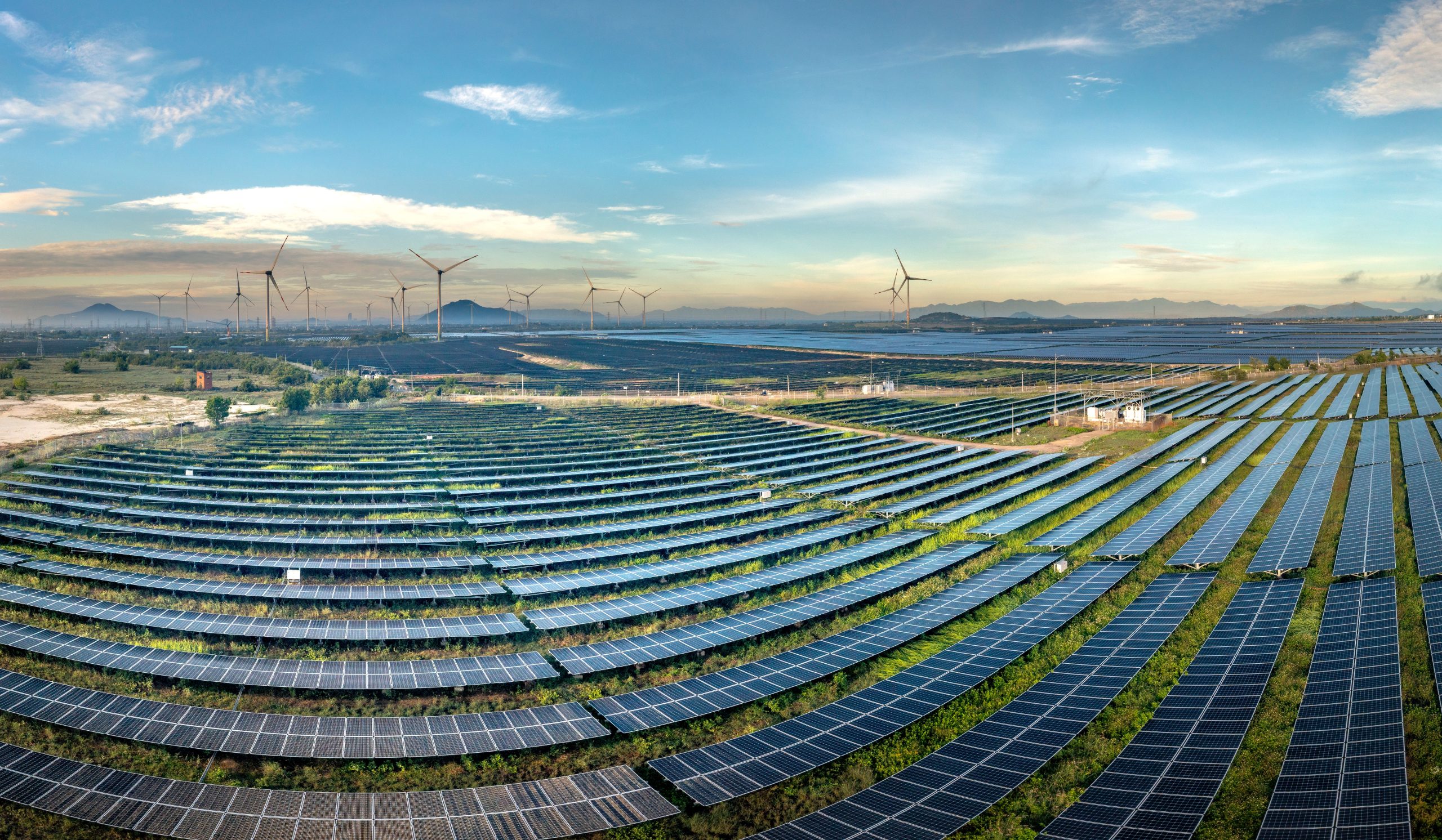
Rooftop solar power for on-site consumption: Key legal considerations for enterprises before investment

Rooftop solar power systems for on-site consumption are attracting increasing interest from enterprises seeking to secure a more proactive power supply and optimise energy costs. However, investment in such systems is not merely a matter of capacity and financial efficiency; it also raises a number of legal considerations that should be addressed from the early stages of project preparation.
The legal framework governing rooftop solar power for on-site consumption has also undergone notable changes. Decree No. 58/2025/ND-CP, as amended and supplemented by Decree No. 243/2026/ND-CP (collectively, “Decree 58”), introduces new provisions concerning the treatment of surplus electricity generated by such systems and the procedures applicable to the development of rooftop solar power systems for on-site consumption.
Accordingly, before making an investment decision, enterprises should assess not only the investment cost, system capacity and payback period, but also the legal structure of the proposed model and the obligations arising therefrom.
This Legal Update by Skarlet & Co Vietnam highlights several key legal considerations that enterprises should take into account when developing and implementing rooftop solar power systems for on-site consumption.
1. Does the project fall within the scope of rooftop solar power for on-site consumption?
Under the current legal framework, correctly determining the classification of the power generation system is important, as this will determine the regulations applicable to its development, grid connection, operation and sale of surplus electricity.
Decree 58 provides greater clarity on the treatment of solar power systems installed on buildings. Accordingly, a construction that is a building or has a building-like structure, meets applicable electrical safety and fire prevention and fighting requirements, and has a solar power system installed on its building envelope for self-generation and on-site consumption may be subject to regulations applicable to rooftop solar power for on-site consumption [1].
In addition, the applicable regulations provide that the capacity of a rooftop solar power system for on-site consumption is determined based on the capacity of the inverter [2].
Accordingly, before making an investment decision, enterprises should clearly identify the factors that may directly affect the applicable procedures and legal obligations, including:
- Whether the project falls within the scope of regulations governing rooftop solar power for on-site consumption;
- The basis on which the system capacity is to be determined;
- Whether the system will be connected to the national power system; and
- Whether the business intends to sell any surplus electricity generated by the system.
2. Does the project satisfy the requirements for construction and operation under other relevant laws?
Rooftop solar power systems are subject to requirements under multiple areas of law. In addition to electricity regulations, enterprises should, depending on the specific project, consider the following legal matters:
- Construction regulations: Relating to the building, structural integrity and installation of the solar power equipment;
- Fire prevention and fighting and safety regulations: Particularly relevant to factories, manufacturing facilities and other buildings subject to specific safety requirements;
- Land and property regulations: Relating to the rights and legal status associated with the installation site and the relevant buildings or structures;
- Tax, invoicing and accounting regulations: Particularly where the project involves the sale or lease of equipment, provision of services, or cooperation arrangements among multiple parties;
- Environmental regulations: Depending on the nature and scale of the project; and
- Customs regulations: Specific issues may arise where the equipment or parties involved are subject to import/export requirements or where the project involves an export processing enterprise (EPE).
Decree 58 also assigns responsibilities to local authorities to provide guidance and inspect compliance with regulations on safety, electricity, construction, fire prevention and fighting, and environmental protection during the installation and operation of rooftop solar power systems for on-site consumption, and to handle violations in accordance with applicable laws [3].
3. Can the business sell surplus electricity?
One issue that enterprises should assess from the investment planning stage is how any electricity generated but not consumed on-site will be treated. The Decree 58 provides for certain cases in which rooftop solar power systems for on-site consumption may sell surplus electricity, including systems connected to the national power system at low-voltage level, as well as other cases satisfying the conditions prescribed by law [4].
Importantly, the volume of surplus electricity to be purchased and sold is subject to agreement between the seller and the buyer but, in principle, must not exceed 50% of the electricity generated at the output of the rooftop solar power system, based on solar irradiance [5].
From 26 June 2026 to 31 December 2030, the parties may also agree on the purchase and sale of surplus electricity exceeding 50% of the electricity generated at the output of the rooftop solar power system, based on solar irradiance, provided that the grid at the connection point has sufficient capacity to receive the electricity and the transaction satisfies the requirements for safe operation of the power system [6].
Accordingly, when preparing the financial model for the project, enterprises should not assume that all electricity generated but not consumed on-site can be sold to the electricity utility.
4. The applicable notification or registration certificate procedure should be determined at the outset
One key consideration for enterprises is that the applicable administrative procedure varies depending on the type and configuration of the rooftop solar power system. In particular:
a) Notification procedure
In the following cases, the entity installing a rooftop solar power system for on-site consumption is required to submit a notification before installing the system:
- An enterprise installing a rooftop solar power system for on-site consumption with a capacity of 100 kW or more that is not connected to the national power system is required to submit a notification to the People’s Committee of the commune where the power system is installed [7].
- An enterprise installing a rooftop solar power system for on-site consumption connected to the national power system at low-voltage level is required to submit a notification to the People’s Committee of the commune where the power system is installed. This requirement does not apply where the installed system has a capacity of less than 1 kW, as determined based on the capacity of the inverter[8].
- An enterprise installing a rooftop solar power system for on-site consumption connected to the national power system at medium-voltage level or higher and not registering to sell surplus electricity is required to submit a notification to the provincial-level People’s Committee [9].
For aforesaid cases, the Decree requires the notification to be submitted at least 10 working days before the scheduled commencement date of installation [10].
b) Certificate of Registration for Development of Rooftop Solar Power
In the following cases, the enterprises developing a rooftop solar power system is required to obtain a Certificate of Registration for Development of Rooftop Solar Power before installing the rooftop solar power system for on-site consumption [11]:
- An entity developing a rooftop solar power system for on-site consumption connected to the national power system at medium-voltage level or higher and selling surplus electricity; or
- An entity developing a rooftop solar power system for on-site consumption that is not subject to a mandatory registration requirement but wishes to obtain a Certificate of Registration for Development.
The provincial-level People’s Committee where the rooftop solar power system is installed has the authority to issue the Certificate of Registration for Development of Rooftop Solar Power [12]. Accordingly, enterprises should determine the applicable procedure and complete the relevant notification or registration process before signing construction contracts, ordering equipment or commencing installation, rather than reviewing the applicable procedural requirements only after the system has been installed.
5. Contractual structure and risk mitigation measures should be designed from the outset
A rooftop solar power project may involve various types of transactions, including equipment purchase and sale, EPC arrangements, operation and maintenance services, equipment leases, and other agreements among the parties. Accordingly, enterprises should not focus solely on the title or form of the contract, but should assess the actual substance and economic nature of the transaction.
Several key questions should be addressed from the outset, including: What is the payment actually made for? Who owns the equipment? Who controls the system? Who consumes the electricity generated? Who bears the operational risks? What happens when the contract terminates?
In particular, where one party finances and invests in the system but the system is installed on premises owned or controlled by another party, the contractual arrangements should clearly address the consequences and allocation of rights and obligations in the event that:
- The contract is terminated before its expiry;
- The premises or facility is transferred to another party;
- The lease or other arrangement relating to the installation site is terminated;
- The system needs to be dismantled or replaced;
- One party breaches its contractual obligations; or
- The system is damaged or fails to achieve the expected output capacity.
In addition, enterprises should review tax, invoicing, accounting and customs implications based on the transaction structure and the parties involved, particularly for projects involving foreign elements or export processing enterprises (EPEs).
Conclusion
The legal framework governing rooftop solar power for on-site consumption has been subject to various adjustments and developments to reflect the evolving market conditions and practical needs of enterprises. Accordingly, an investment decision should not be based solely on system capacity, investment costs and payback period, but should take into account the project as a whole, including:
Project Model – System Capacity and Grid Connection – Surplus Electricity – Regulatory Procedures – Installation Premises – Ownership of Assets – Contractual Structure –Arrangements upon Project Termination.
Reviewing these matters from the project design stage can help enterprises identify potential legal and commercial risks at an early stage, enabling them to adopt an appropriate investment structure and minimise unexpected costs and complications during project implementation.
Is your enterprise planning to install a rooftop solar power system? Let Skarlet & Co Vietnam support you from project structuring and legal review to contractual arrangements, helping your business identify and manage potential risks from the outset. Contact Skarlet & Co Vietnam for legal advice.
LEGAL REFERENCES
[1] Decree 58, Article 13.3.
[2] Decree 58, Article 13.5.
[3] Decree 58, Article 34.2.
[4] Decree 58, Article 14.1.
[5] Decree 58, Article 14.2(a).
[6] Decree 58, Article 14.2(b).
[7] Decree 58, Article 15.1.
[8] Decree 58, Article 15.2.
[9] Decree 58, Article 15.3.
[10] Decree 58, Article 15.4(a).
[11] Decree 58, Article 16.1.
[12] Decree 58, Article 16.3.